I have not written online in over a year. I have wanted to get back to it for some time, and this is my attempt to start again.
A lot has happened since I last wrote. At the same time, it somehow feels like the opposite.
This is a write-up of that stretch and the lessons I plan to take forward.
To situate things quickly: we worked on dotflo until October 2024, then voice AI for insurance companies until February 2025, then Supamill, a conversational workflow builder that connected your apps and browser and ran multi-step automations from a plain-language request, until September 2025. From September to December, we were deep in home services. Since mid-January 2026, we have been back in health, which is where this story ends up. Spencer and I have been through all of it together.
What a day looked like in pivot hell
There were different days, but the dilemma in my head about whether we were pursuing the right thing remained every day.
There were days when we were knocking on doors and getting great responses that aligned with our hypothesis, and we would come back to the whiteboard with a feeling of being onto something. The next day, those same hypotheses would get broken into pieces, and we would be back at the whiteboard questioning whether we were at square one again.
The only thing that helped me personally was having two anchors every day. Mornings were strength sessions, and evenings were Muay Thai. They always kept me centered. Sparring especially. When I am in a position of literally getting punched in the face, everything else starts to feel small.
There were also two kinds of days: ones when we were at home researching, reading, and tinkering, and ones when we were on the road, in cars, buses, and trains, going to different spots and trying to talk to people. The road days were definitely better because they gave an illusion of momentum. It might have been false, but it kept us sane.
There were periods when we overdid the road, though, staying out all day with almost no time or energy left to soak in what was happening. Looking back, the ideal for me would be 80 percent talking and 20 percent focused digesting. We learned that soon enough and started applying it to our weeks.
Home services
I did not even know the term before September 2025. From then until the end of the year, it was something I would be obsessed with.
San Francisco gave us an early constraint: companies there, home services or otherwise, had already heard from startups like ours. One HVAC company had been contacted by a couple of others. We worried we would not find enthusiastic partners.
We looked for somewhere away from Silicon Valley with a dense home-service market. We felt our best bet was the East Coast, with its more extreme and varied weather. We bought one-way tickets to Maryland.
We visited more than 200 businesses in Maryland. Most days were spent driving; evenings were for distilling what we heard. We were exhausted.
It felt like a football match. Some days we reached halftime, lunch, without scoring anything: no conversation that uncovered a truth. Then one would suddenly run for more than an hour, and the day became a success. With so much uncertainty, our focus was simply to make that day successful. We kept pushing at every door and thinking, "maybe this one."
We religiously took notes on the problems these companies faced, the software they used, and what did or did not work. Sometimes owners shared their personal stories, both good and bad, and the conversation moved from an interview to something more human. We connected with that.
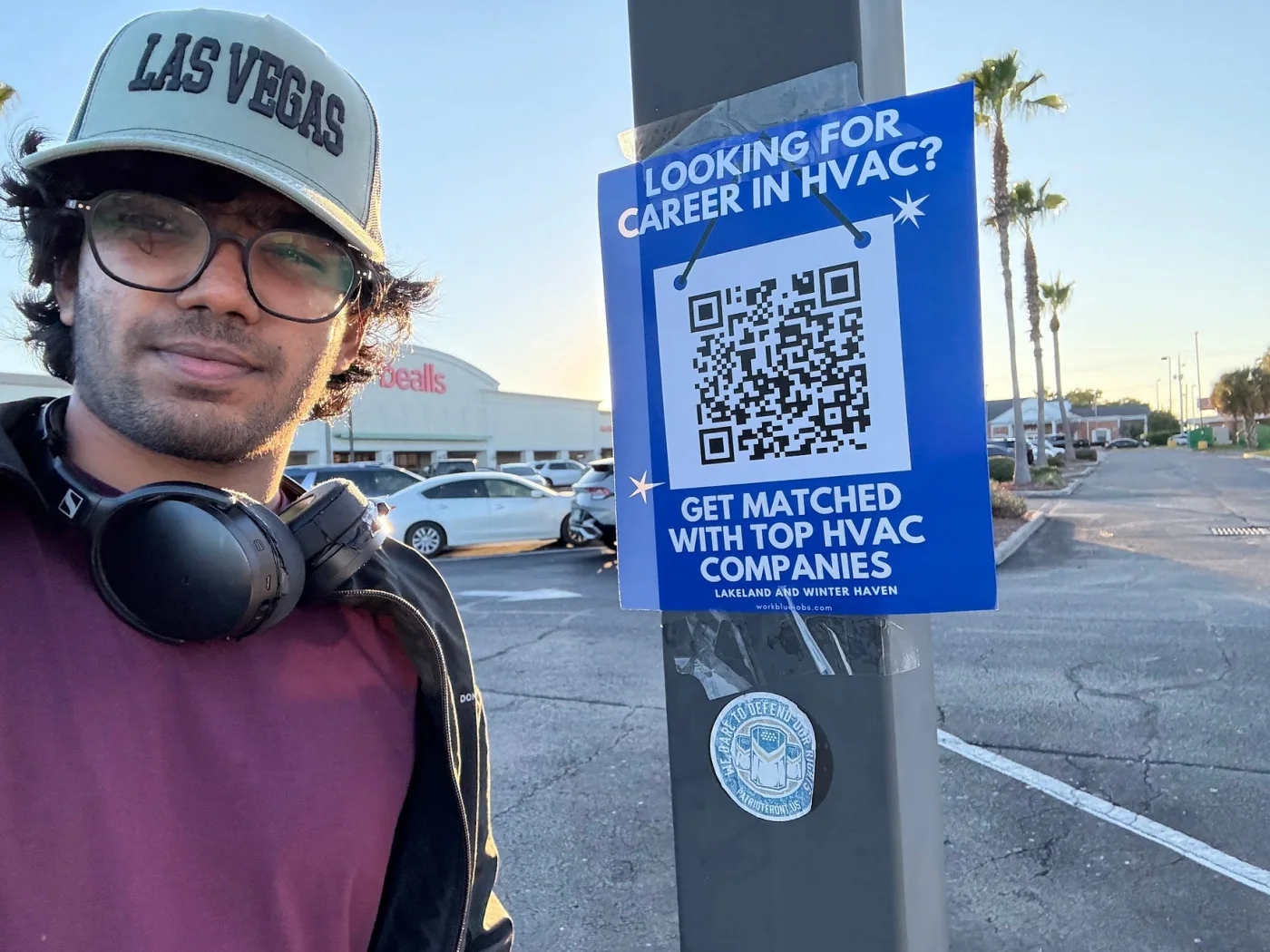
Before Maryland, we had called owners across the country both to learn and to ask whether we could shadow them. Conversations reveal surface-level issues; working beside a company for a few days can reveal the deeper ones, including those an owner might overlook.
One of those calls was with Billy, one of the most genuine humans I have met, who owns a reputable HVAC business in Florida. We planned ten minutes and talked for an hour and a half. At the end, I asked him the big question: can I come and shadow you? He said yes immediately. He wanted new eyes on how he ran the business and what he could improve.
For us, this was big. It gave us a view of the business from the back office to the technicians in the field.
Shadowing
In early November 2025, we landed in Orlando, Florida, and made our way to Winter Haven, also known as the land of lakes and gators.
We shadowed Billy's team for a week and lived the days of service technicians. Before that, we had only heard fragments in calls. Things began to make sense because we could finally see how the business worked.
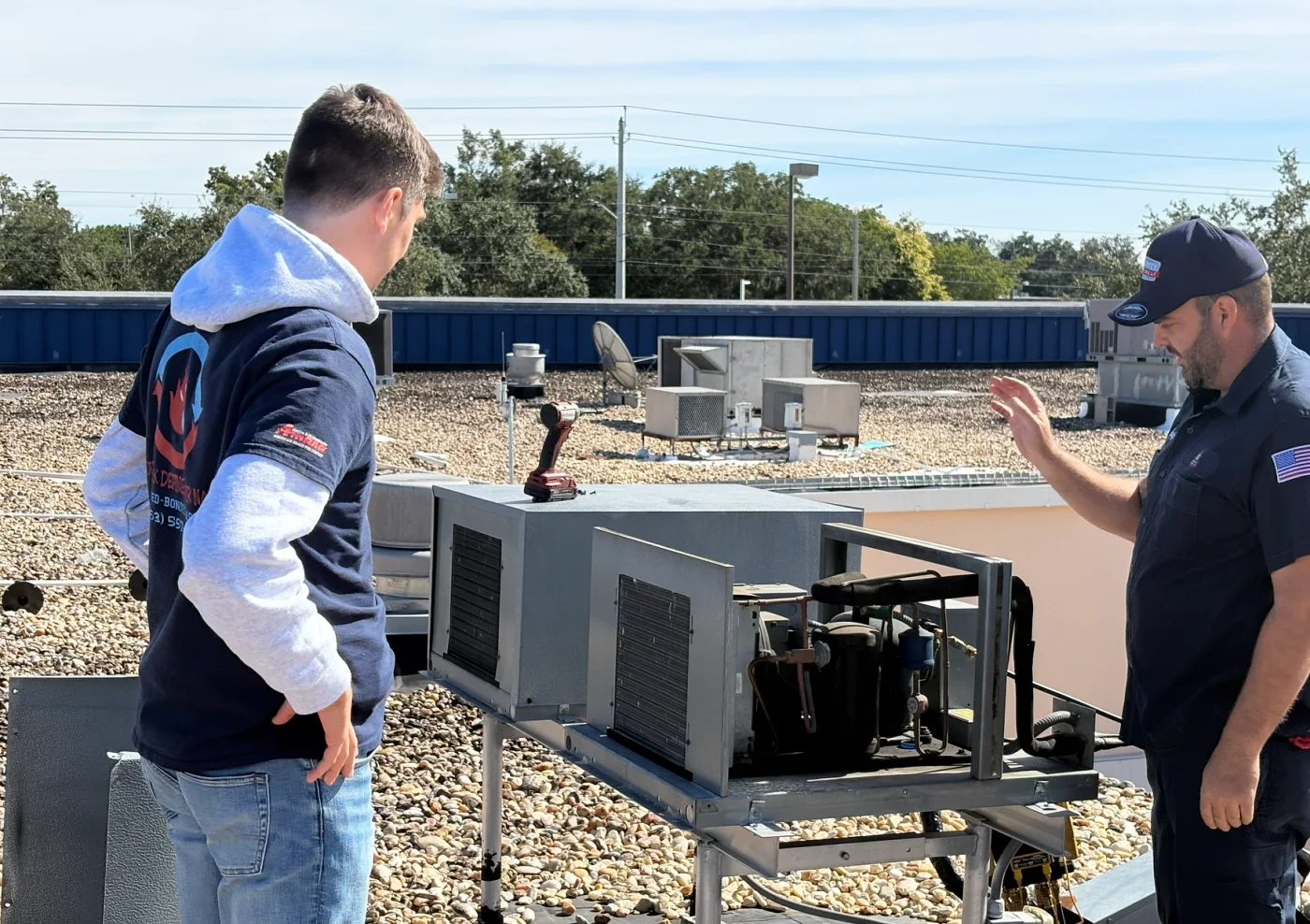
There was huge attention to detail. The competition was intense, so small things added up. Something as simple as wearing foot covers could mean a homeowner loving your service and recommending you to others.
The software served its purpose. ServiceTitan was used religiously. But when a task did not need it, people used whatever way already worked. Some work was monotonous and repetitive, and some people actually enjoyed it.
There were loose threads in what the software offered and how easy it was to use. One thing was clear, though: when an owner saw something help, they were ready to pay to experiment.
We also heard what happened on large commercial projects. Payment took time, and if finances were not managed carefully, businesses could struggle to pay their technicians. Skilled labour is scarce, so losing those employees was a serious risk. Some owners took loans just to make payroll and keep their teams together. That created enormous stress. It helped explain why smaller shops preferred residential projects, where payment was immediate. For a brief period, we explored pivoting into lending. Thank God we did not.
My biggest takeaway, though, was Billy's leadership. He was on a mission and still welcomed feedback from two 25-year-olds who had never worked in home services. He knew exactly how little we knew about the industry, but he still wanted an outside perspective. Titles did not matter; he would listen to anyone with an idea for making the business better.
Walking away
We were having hundreds of conversations, but we still were not finding conviction in the industry. It felt as though we were forcing it on ourselves, desperate to find something non-obvious within the industry worth solving. We were forcing ourselves to find the "insight."
A lot of people talked about leads and voice calls. But we knew there were already players serving this, and we knew the market from our previous iteration in the insurance space. We did not want to participate in a lead or voice AI war.
There was not one single moment. Through December, the questions slowly increased, and we could not see a clear path forward. After we were back in San Francisco, we started taking a more formal step back.
Taking a step back
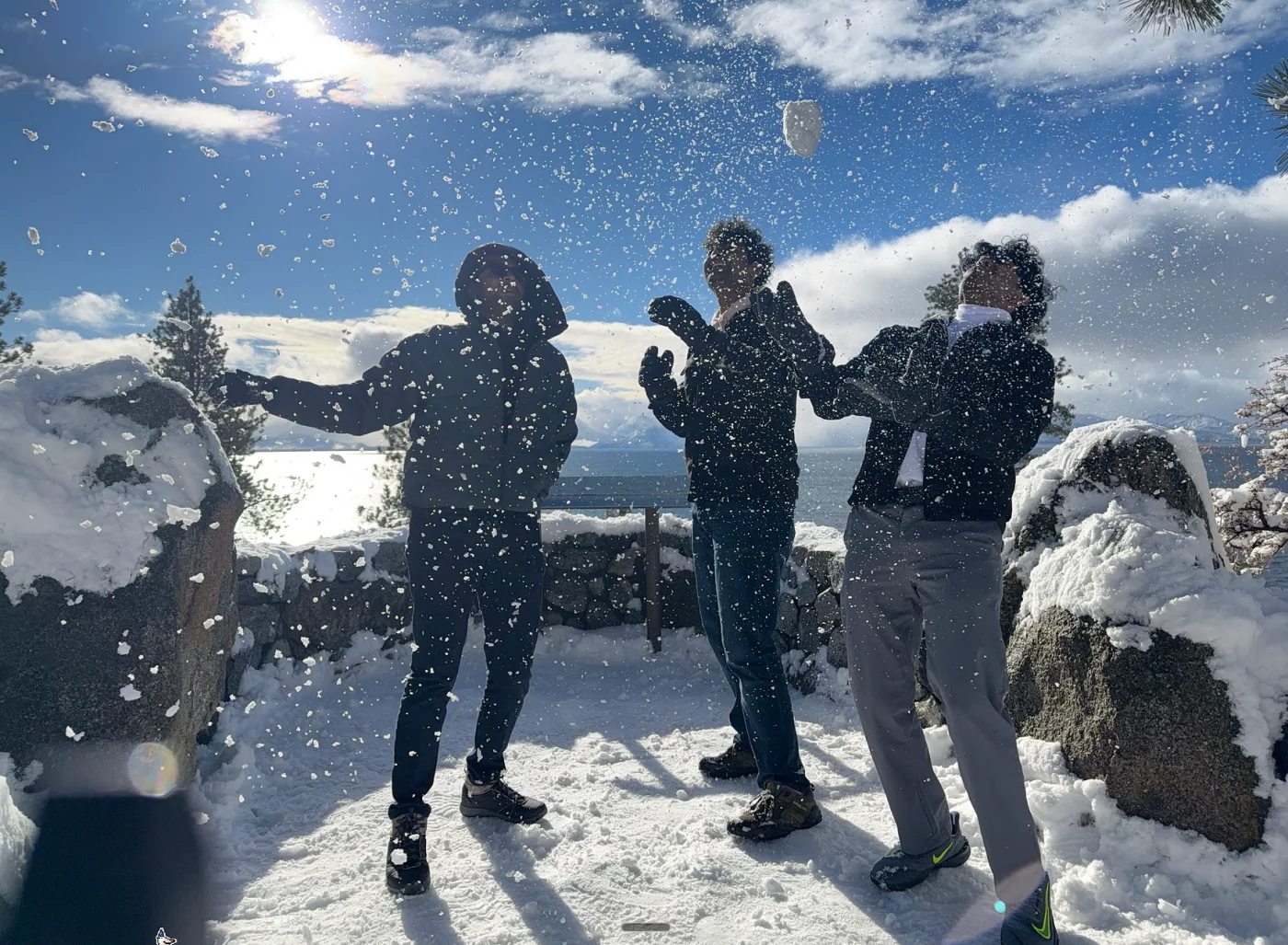
By the end of 2025, we knew we needed to step away for a bit. We decided to take a full break over Christmas. My good friend Vedant visited us in the Bay Area, and I got to spend good time with him and give my mind a reset. We did a road trip across the West Coast, covering about 2,500 miles. I did not touch my laptop.
After coming back, we started discussing and thinking more seriously about whether to continue.
I keep getting the question of how it makes less logical sense to keep working on a startup. I do get it. The answer I give myself is that I know at some point I want to be working toward building, and if the trough of sorrow is going to exist anyway, why not experience it right away?
I have gotten good pushback on this, and I was looking at that as well. I also started reading a book called Quit, which said that it makes perfect sense to quit at some points, and that continuing might be the riskiest thing you ever do. Like people climbing Everest who keep pushing and end up dying.
I was rethinking things. But my gut still told me to go ahead one more time and give it a shot.
The ten-year question
We gathered up the courage to give this one more try. One strict rule we set for ourselves was this: what are we going to work toward for the next ten years, even if we are not pursuing the startup?
I opened the statements of purpose I had written for my graduate school applications. I wanted to read those documents from 2020 once again. I was already thinking about healthcare and, given the position I was in, I looked to those documents for inspiration about what I wanted to do with my life.
Every application had the same line in it.
"The next decade will be an important one for the convergence of medicine and AI. I want to be at the forefront, working on these interdisciplinary challenges."

I wrote that in 2020. Here I was, asking myself what I would work toward for the next ten years, reading an answer I had already given, right in the middle of the decade I was talking about.
Looking back, I have naturally kept moving toward this space. So it was clear that this was one area that definitely held my interest. I am not saying other spaces would not interest me as much, but based on everything I knew about myself, I knew healthcare was going to remain an option.
I remembered that I had written the line. It had stayed in the back of my mind. Reading it again gave me more energy to tackle this space because it was a promise made a few years ago, with part of the decade still left to keep it.
Reading my own words from back then, they still felt true. I also felt respect for the older version of me, for aiming at that and for keeping at it.
I asked myself another question too. If I were not doing a startup, what would I be doing? My mind immediately went to either working for a health tech startup or starting something again in the space.
Back to health
Starting in mid-January 2026, we were back in health.
We started with the same way of working: going through different healthcare offices. This was my favourite period after a while of dryness. We ended up meeting very interesting people. People in healthcare are also very nice and very passionate.
We were initially exploring how we could build an EMR system from the ground up for smaller practices, so they would not need to repurpose the systems built for large companies. This felt especially relevant for concierge services, which were trying to break with the existing system by providing direct care without involving insurance.
We looked at a few different problems in this area. We first explored how we could help older adults through a single place for their care, and slowly moved through different parts of healthcare.
Shifu
One big thing we wanted this time was to be users of our own product. One thing that has stayed amazingly constant for me over the last five years is training, along with combat sports.
If you have watched Kung Fu Panda, you know Shifu, the red panda who trains Po. The word itself means teacher, the one in your corner who knows you and pushes you. That is what we want to give everyone: their own Shifu, one that can train them in any pillar they are trying to get good at. It is also why our logo is a red panda.
But we do not want to just hand everyone an AI and call it a coach. We want a Shifu that is superpowered by real experts it relies on. Behind Shifu is a care team of licensed dietitians and certified exercise coaches who review and refine what it builds for you, so what reaches you carries both the system's context and an expert's judgment.
We are starting with exercise and nutrition because they were immediate and could be tested and iterated on easily. Going forward, we want to do all of healthcare.
The way Shifu works today is that you set your goals for exercise and nutrition, and Shifu, along with licensed dietitians and certified exercise coaches, builds and adjusts your plans, working with you over text. We feel text is the easiest way for a user to interact with this kind of system, especially one that needs to be by your side every day.
The app brings everything together in one place, allowing Shifu to understand your history, notice how you are changing, and guide you with the full picture in mind.
What we are building now
We are going all in on Shifu, and we are forming our health team, the team that will shape our systems and guide our customers. We are starting with registered dietitians and certified exercise professionals. If you want to shape the next chapter of healthcare, .
Alongside the health team, we are also getting ready to build our engineering team. If this resonates with you, if you care deeply about healthcare, and if you want to work with a strong health team on one of the most important problem spaces of the coming decades, .
Shifu brings together many of the things I have cared about for years: healthcare, training, the compounding effect of daily habits, and the belief that good guidance should be personal, continuous, and grounded in real expertise. Healthcare is also the field I feel most connected to. For the first time in a while, the problem, the product, and how I want to spend my time feel aligned.
Some of the most meaningful moments so far have been small. Friends have started using Shifu, and a few have told me they are becoming more consistent and that their routines are moving in a healthier direction. I do not take that as proof that we have figured everything out. But seeing something we built begin to matter in the ordinary days of people I care about has made the work feel real.
The last year did not teach me a formula for finding the right idea. It taught me that hundreds of conversations can sharpen conviction, but they cannot manufacture it—and that the work worth returning to often leaves clues throughout your own life.